Enjoy 10% off for Patient Appreciation Day with code THANKYOU10 on 10/15/2026 only! Shop Now >



Enjoy 10% off for Patient Appreciation Day with code THANKYOU10 on 10/15/2026 only! Shop Now >
Breast Cancer awareness starts with prevention.


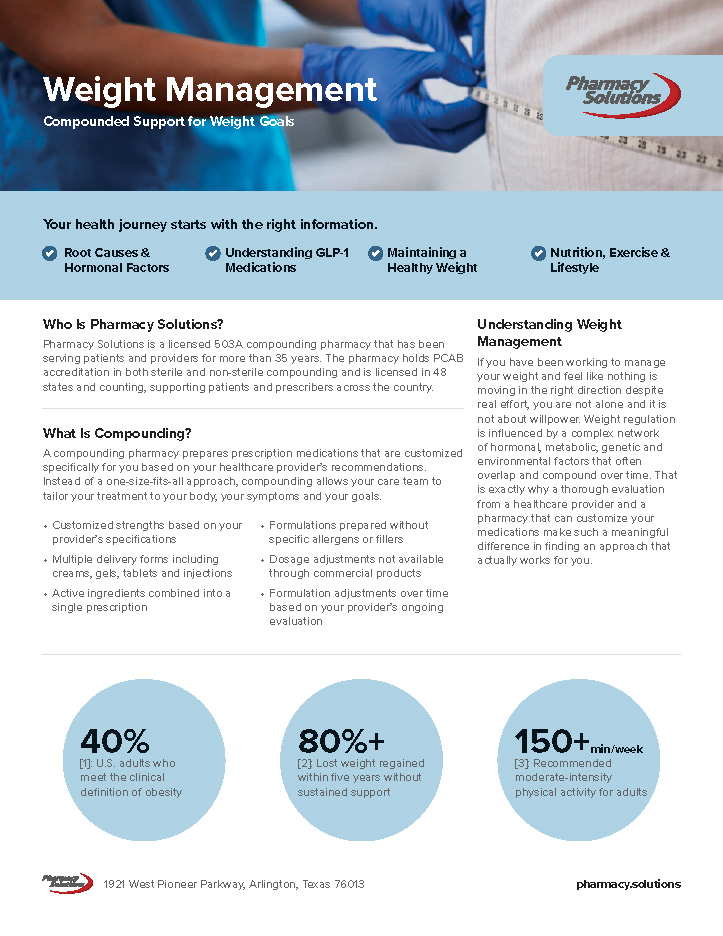
Weight management is influenced by the way several lifestyle factors work together, not by any single change in isolation. Nutrition, physical activity, sleep and stress each affect the hormones and metabolic processes that determine how the body stores and uses energy. Balanced nutrition, including foods that help stabilize blood sugar and regulate insulin response, plays a meaningful role in supporting the hormones that control hunger and fullness, including GLP-1, which is covered in detail on the Understanding GLP-1s page of this site. Research shows that balanced eating patterns, at least 150 minutes per week of moderate-intensity physical activity, quality sleep and effective stress management produce more sustainable results when addressed together. Practical weight reduce tips include eating consistent meals, prioritizing seven or more hours of sleep per night, managing stress and monitoring your progress at regular intervals. Building these habits gradually with provider guidance is among the strongest predictors of long-term success. The Transform Medical Weight Loss Program, available through Pharmacy Solutions, connects patients with trained providers who integrate lifestyle education with customized protocols. As a 503A compounding pharmacy, Pharmacy Solutions also prepares individualized formulations when standard options are not the right fit. Over-the-counter supplements such as ProBalance Pro-Peptide, Pro-Balance Pro-DIM, ProBalance Green Tea-70 EGCG, Pro-Balance Pro-Glucose Support, Pro-Balance ALA 300 Alpha Lipoic Acid, Pro-Balance L-Glutamine and Metagenics UltraFlora Control are available without a prescription and may complement a broader plan when discussed with a healthcare provider.



What I appreciated most was that no one treated this like a quick fix. My provider and the pharmacy team helped me build a plan I could actually stick with, and they stayed involved as things changed along the way.
I knew I needed to make changes, but I didn’t know where to start. Having a team that helped me understand how everything connects, from what I eat to how I sleep, made the whole process feel manageable for the first time.
I tried so many things on my own before I finally asked for help. Once my provider looked at the full picture and we built a plan that actually addressed what was going on, I finally felt like I was making progress. Having a pharmacy that could customize everything made the process so much easier.
Improving weight through lifestyle changes involves a combination of balanced nutrition, regular physical activity, quality sleep and effective stress management. Research shows that addressing these areas together produces more sustainable results than focusing on any single factor. Working with a healthcare provider can help you develop a personalized plan that accounts for your specific health profile, goals and daily routine.
Effective weight reduce tips supported by research include eating consistent, balanced meals built around whole foods, engaging in at least 150 minutes of moderate-intensity physical activity per week, prioritizing seven or more hours of quality sleep per night and developing strategies for managing stress. Tracking food intake, monitoring weight at regular intervals and building accountability into your routine are also associated with long-term success.
Sleep has a direct impact on the hormones that regulate hunger and fullness. When sleep is insufficient, ghrelin levels rise and leptin levels fall, which can increase appetite and cravings for high-calorie foods. Cortisol levels may also increase, promoting fat storage. Research published in the British Journal of Nutrition found that incorporating sleep improvement strategies into weight management plans may be more effective than focusing on diet and exercise alone.
Chronic stress activates the body’s stress response system, keeping cortisol levels elevated. This can increase appetite, promote fat storage around the abdomen and impair insulin sensitivity. Stress can also disrupt sleep, reduce motivation for physical activity and trigger emotional eating patterns. Evidence-based stress management strategies such as regular exercise, mindfulness practices and professional support can help regulate cortisol and support weight management goals.
Current guidelines from the CDC and American Heart Association recommend at least 150 minutes per week of moderate-intensity aerobic activity or 75 minutes of vigorous-intensity activity, along with muscle-strengthening activities on two or more days per week. The American College of Sports Medicine notes that greater amounts of activity, above 250 minutes per week, may be needed for significant weight loss or long-term weight maintenance.
A 503A compounding pharmacy can prepare customized medications based on a provider’s prescription when standard commercial options are not the right fit. Pharmacy Solutions works directly with healthcare providers to ensure each preparation meets the individual patient’s needs. The pharmacy team also provides ongoing support, medication education, supplement guidance and coordination with your provider’s office.
The Transform Medical Weight Loss Program is a structured, provider-guided program available through Pharmacy Solutions. It connects patients with trained providers who develop customized protocols based on comprehensive clinical assessment. Transform supports patients through both active weight management and long-term maintenance by integrating lifestyle education with personalized clinical care.
[1] U.S. Department of Health and Human Services. Physical Activity Guidelines for Americans, 2nd edition. Washington, DC: 2018. https://odphp.health.gov/our-work/nutrition-physical-activity/physical-activity-guidelines/current-guidelines
[2] St-Onge MP, et al. The emerging importance of tackling sleep-diet interactions in lifestyle interventions for weight management. British Journal of Nutrition. 2022;128(4):S66-S72. https://pmc.ncbi.nlm.nih.gov/articles/PMC9340846/
[3] Kim JY. Optimal diet strategies for weight loss and weight loss maintenance. Journal of Obesity and Metabolic Syndrome. 2021;30(1):20-31. https://www.jomes.org/journal/view.html?doi=10.7570/jomes20065
[4] Donnelly JE, et al. American College of Sports Medicine position stand: appropriate physical activity intervention strategies for weight loss and prevention of weight regain for adults. Medicine and Science in Sports and Exercise. 2009;41(2):459-471. https://pubmed.ncbi.nlm.nih.gov/19127177/
[5] Taheri S, et al. Short sleep duration is associated with reduced leptin, elevated ghrelin, and increased body mass index. PLoS Medicine. 2004;1(3):e62. https://pubmed.ncbi.nlm.nih.gov/15602591/
[6] Tomiyama AJ, et al. Low calorie dieting increases cortisol. Psychosomatic Medicine. 2010;72(4):357-364. https://pubmed.ncbi.nlm.nih.gov/20368473/
Tell us a little about what you are looking for and we will take it from there. Whether you have a prescription ready, questions about a therapy your provider mentioned, or just need help figuring out your next step, our team is here and ready to help.
"*" indicates required fields

To submit your order, click the “PRINT/SAVE” button located under this pop-up.

You can save the PDF to your computer to fax at a later date or print it now to fax immediately.

Fax your order form to 817-860-6083 for processing.

Get detailed information, research, and deeper product context. Toggle on to see more educational content.
Keep things brief and see related products faster. Toggle on to focus on products.

New to Pharmacy Solutions? Register now